7 Best All Stainless Steel Coffee Maker No Plastic
Most coffee makers touch hot water against plastic somewhere in the brewing path — a reservoir, a drip cone, an internal tube — and for a growing number of coffee drinkers, that’s a dealbreaker. Hot liquid is more effective than cold at leaching compounds out of plastic, which is why brewers built entirely from stainless steel have become the go-to choice for anyone trying to cut plastic out of their morning routine without giving up good coffee.
Why Choose Stainless Steel Over Plastic
Food-grade stainless steel (typically labeled 18/8 or 304, sometimes higher-grade 316) is chemically inert at brewing temperatures — it doesn’t leach compounds into hot water the way plastic can, and it doesn’t absorb coffee oils or retain odors the way some other materials do over repeated use. That combination means two practical benefits: peace of mind about what’s touching your coffee, and a brewer that keeps tasting the same on day one thousand as it did on day one, since metal doesn’t degrade in the way plastic components eventually can.
The trade-off is mostly upfront cost and weight — stainless steel brewers generally cost more than plastic-bodied equivalents and are heavier to handle. For most people making the switch, that’s a one-time cost against a brewer that’s genuinely built to last decades rather than a few years.
Top All-Stainless-Steel Picks
Aarke Coffee Press
Aarke built its French press entirely from stainless steel with no plastic anywhere in the design, and it shows in the finish — this is as much a design object as a brewing device, with the kind of minimalist Scandinavian look that holds up on a counter rather than getting hidden in a cabinet.
Frieling Double-Wall French Press
Frieling’s French press uses 18/10 stainless steel throughout, with a double-wall insulated body that keeps coffee hot substantially longer than a single-wall glass or steel press. For anyone who brews a full pot and doesn’t finish it in one sitting, the insulation is a genuinely practical advantage over glass alternatives.
Ziruma Non-Toxic French Press
Ziruma markets its press specifically around the non-toxic angle, built from 316 surgical-grade steel — a higher corrosion-resistant grade than the 18/8 steel used in most kitchenware. It’s a reasonable choice for anyone who wants the highest steel grade available in this category and is willing to pay for it.
Presto Stainless Steel Percolators
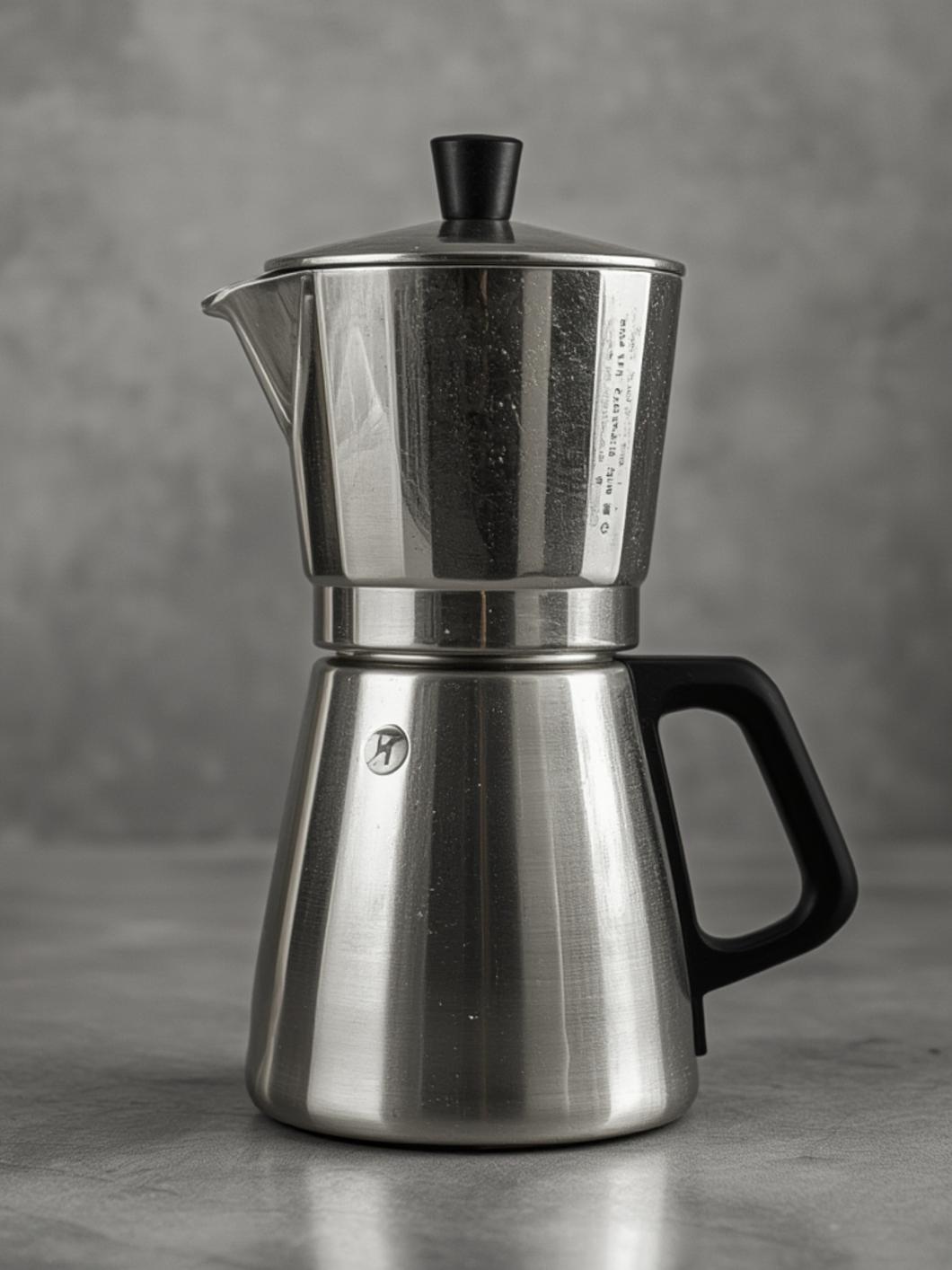
Presto makes both an automated electric percolator (the 02811) and a manual stovetop version (the 02822 6-cup), both built with all-stainless bodies so no plastic parts ever contact the coffee. Percolators brew differently than a French press — recirculating hot water through the grounds rather than steeping — which produces a stronger, more traditional cup that some drinkers prefer for a large-batch brew.
COLETTI Bozeman Percolator
COLETTI’s Bozeman is a stovetop and campfire-friendly percolator built from stainless steel, aimed more at outdoor and camp brewing than a kitchen countertop. It’s a solid option if your plastic-free brewing needs extend beyond the house to camping trips, where a percolator’s durability matters even more.
OXO Brew Stainless Steel French Press
OXO’s 32-ounce press uses a stainless steel housing built around a borosilicate glass carafe — worth noting if your goal is zero plastic touching the brewed coffee specifically, since the housing (not the carafe) is what’s stainless here. The steel shell adds insulation the glass wouldn’t have on its own.
Farberware Stainless Steel Percolators
Farberware has built stainless percolators for long enough that the brand name is practically shorthand for the category, offering both an electric version with a fully stainless brewing basket and classic stovetop models. They’re a straightforward, no-frills option for anyone who grew up on percolator coffee and wants the same style without plastic components.
French Press vs. Percolator: Which Should You Choose
The two brewing methods produce genuinely different cups, and the right choice depends on what you’re used to drinking. A French press steeps grounds in hot water for a fixed time before separating them with a mesh plunger, producing a fuller-bodied cup with more of the coffee’s natural oils intact — closer to what most specialty coffee drinkers expect today. A percolator repeatedly cycles boiling water through the grounds, which produces a stronger, more traditional diner-style cup, but is also easier to over-extract into bitterness if left running too long. If you’re coming from a modern pour-over or drip habit, a French press will feel more familiar; if you grew up on percolator coffee, a stainless steel percolator will feel like a straightforward upgrade rather than a change in style.
Caring for Stainless Steel Brewers
Stainless steel is low-maintenance compared to glass or plastic, but it isn’t zero-maintenance. Rinse immediately after each use — coffee oils that sit and dry are considerably harder to remove than oils rinsed while still warm. For deeper cleaning, a baking soda paste handles most residue without scratching the finish; avoid steel wool or abrasive scrubbers, which can dull the surface over time. If you’re in a hard-water area, an occasional white vinegar rinse prevents the mineral buildup that eventually affects both flavor and the smoothness of a plunger or percolator’s moving parts.
FAQs
Is stainless steel actually safer than plastic for brewing coffee?
Food-grade stainless steel is chemically inert at the temperatures used for brewing coffee, meaning it doesn’t leach chemicals into your drink the way some plastics can under heat. For anyone specifically trying to reduce plastic exposure from food and drink contact, it’s a meaningful upgrade.
Does stainless steel change how coffee tastes?
No — unlike some materials, it doesn’t impart its own flavor or absorb oils from previous brews, so what you taste is the coffee itself rather than any influence from the brewing vessel.
What’s the difference between 18/8 and 316 stainless steel?
Both are food-safe grades. 316 (sometimes called “surgical-grade”) contains added molybdenum, which gives it better resistance to corrosion and pitting over time, particularly in humid or high-mineral-water environments — one reason it commands a higher price than standard 18/8 steel.
Can a stainless steel French press go in the dishwasher?
Many can, but always check the specific manufacturer’s care instructions first — some presses have gaskets or seals that degrade faster with repeated dishwasher cycles, even if the steel body itself is dishwasher-safe.